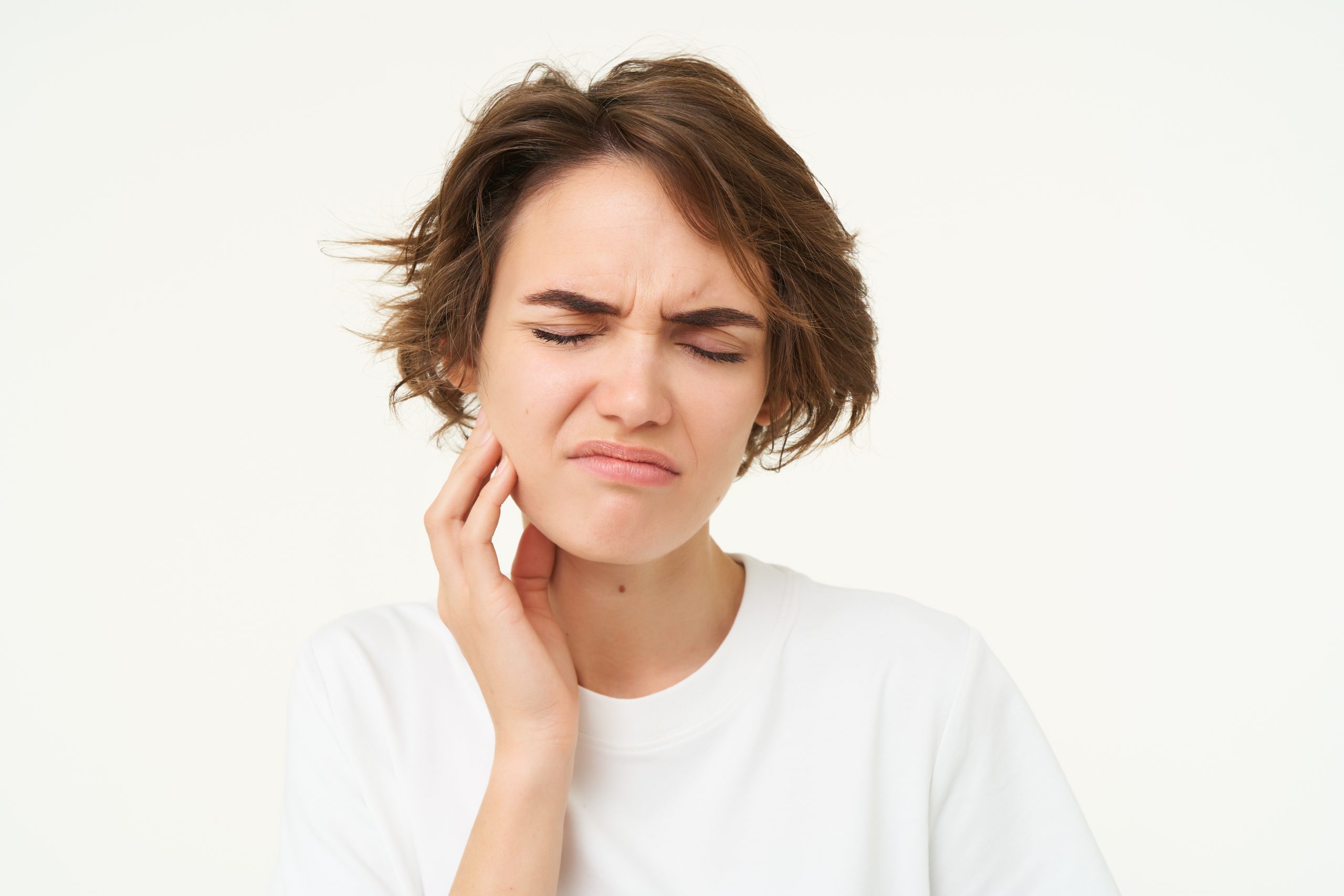
Jaw pain when chewing can make every meal uncomfortable. Sometimes it is a short-term ache after a long day of clenching or a chewy meal. Other times it points to a problem with the jaw joint, the muscles that move the jaw, or a tooth. Knowing the likely cause helps you decide what to try at home and when to see a dentist.
Common Causes of Jaw Pain When Chewing
TMJ Disorders
The temporomandibular joints (TMJ) connect your lower jaw to your skull, just in front of each ear. When the joint or the muscles around it are strained or inflamed, chewing can cause aching, clicking, popping or a feeling that the jaw is stuck. These problems are often called TMD (temporomandibular disorders). Pain may also spread to the temples, ears or neck.
Teeth Grinding and Clenching
Many people grind or clench their teeth at night or during stressful moments without noticing. This overworks the jaw muscles, which then feel tired and sore when you chew. Signs include morning headaches, flattened or chipped teeth and sensitive teeth.
Tooth Problems
Pain that seems to come from the jaw can start in a tooth. A cavity, a cracked tooth, an abscess or a high filling can all hurt when you bite down. Tooth pain is often sharper and linked to one spot, while joint and muscle pain feels more like a dull ache.
Wisdom Teeth
Wisdom teeth that are coming in, partly erupted or impacted can cause pressure, swelling and pain at the back of the jaw, especially when chewing.
Gum Disease or Infection
Infected gums or an abscess can make the jaw tender and swollen. Swelling, a bad taste or fever with jaw pain needs prompt dental care.
Bite Problems
When teeth do not meet evenly, some muscles work harder than others. Over time, a misaligned bite can lead to muscle fatigue and joint strain.
Injury or Arthritis
A blow to the face, a sports injury or even opening very wide during a long yawn can strain the jaw joint. Arthritis can also affect the TMJ, causing stiffness and aching that is often worse in the morning or after chewing. These cases need an exam to rule out a fracture or joint damage.
Other Symptoms to Watch For
- Clicking, popping or grating sounds when you open your mouth
- Difficulty opening wide or a jaw that locks
- Earaches without an ear infection
- Headaches around the temples
- Facial tiredness after eating
- Pain in one tooth when biting
What You Can Do at Home
Mild jaw pain often improves with simple steps:
- Choose softer foods and cut food into small pieces.
- Avoid chewing gum, tough meats and very chewy breads for a while.
- Apply a warm compress to sore muscles, or a cold pack if there is swelling.
- Try gentle jaw stretches and massage of the muscles in front of the ears.
- Notice daytime clenching and keep your teeth slightly apart with lips closed.
- Use over-the-counter pain relief as directed.
When to See a Dentist
Book an exam if jaw pain lasts more than a week or two, keeps returning, or makes it hard to eat. See a dentist promptly if you have swelling, fever, a bad taste, a jaw that locks open or closed, or pain focused on one tooth. Your dentist checks your teeth, bite, jaw joints and muscles, and may take x-rays to find the cause.
How Jaw Pain Is Treated
Treatment depends on the cause:
- Night guards protect teeth and reduce strain from grinding and clenching.
- Bite adjustments correct high fillings or uneven contact between teeth.
- Dental treatment such as a filling, crown or root canal treats pain that starts in a tooth.
- TMJ therapy combines home care, exercises and appliances to calm the joint and muscles.
- Botox for TMJ can relax overactive jaw muscles for some patients with clenching-related pain.
- Wisdom tooth removal may be advised if an impacted tooth is the source.
Learn more about TMJ therapy in Oakville and Botox for TMJ in Oakville at Calma Dental. If grinding is the problem, a custom guard can help; see our mouth and sports guards in Oakville.
Looking for a dentist in Oakville to check your jaw pain? Our team welcomes new patients.
Frequently Asked Questions
Why does my jaw hurt when I chew?
The most common causes are TMJ disorders, teeth grinding or clenching, a cavity or cracked tooth, wisdom teeth and gum infection. A dental exam is the best way to find the source.
Can jaw pain when chewing go away on its own?
Mild muscle soreness often improves in a few days with soft foods, warmth and rest. Pain that lasts longer than a week or two, or keeps coming back, should be checked.
Is jaw pain a dental emergency?
Jaw pain with facial swelling, fever, trouble swallowing or a jaw that locks needs urgent care. Call your dentist right away in these cases.
Can a dentist treat TMJ pain?
Yes. Dentists diagnose and treat many TMJ problems with night guards, bite adjustments, home exercises and, for some patients, Botox injections.
