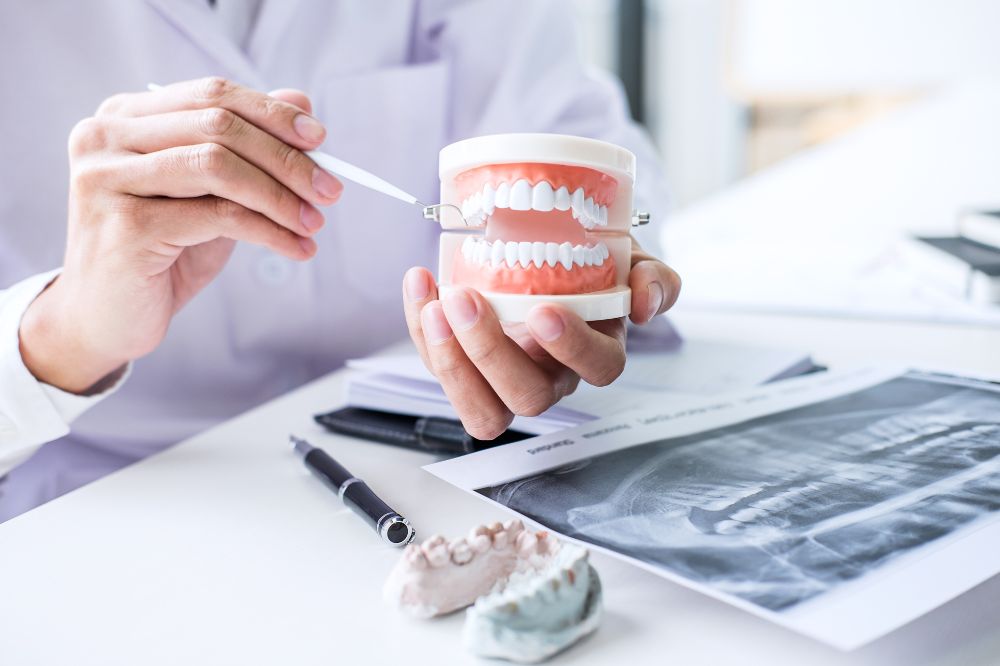
Millions of people wear dentures. And millions of those people are quietly struggling with the same daily frustrations — dentures that slip when they eat, click when they talk, and shift when they smile. If you wear dentures and recognize any of this, you are not alone. And more importantly, you do not have to keep living this way. If you are looking for a dentist near you in Oakville who understands the real impact that loose dentures have on daily life, this guide is for you.
How Unstable Dentures Make Eating, Speaking, and Smiling Difficult
This is the part most dental conversations skip over — the actual day-to-day reality of living with dentures that do not stay where they should.
Eating becomes stressful
One must enjoy their food. However, when dentures slip and slide during meals, eating becomes a chore instead of a pleasure. Many denture wearers:
- Leave out crunchy, hard, and chewy food completely.
- Cut everything into tiny pieces before attempting to eat
- Chew very slowly and carefully, constantly monitoring the denture
- Avoid eating in public because of the anxiety it creates
- Miss out on nutritious foods like raw vegetables, nuts, and lean meats
Over time, a restricted diet affects overall nutrition and health — not just enjoyment.
Speaking becomes embarrassing
Dentures that do not fit securely affect speech in ways that are difficult to disguise. The denture may:
- Slip mid-sentence, causing a noticeable pause or slur
- Create a clicking or clacking sound when talking
- Make certain sounds harder to form clearly
- Cause the wearer to speak more quietly or carefully than they naturally would
Many people with loose dentures begin to avoid conversations, phone calls, and social gatherings because of how unpredictable their speech has become.
Smiling becomes something to hide
Smiling should be effortless. But when there is constant concern that a denture might move or show its edges, smiling freely becomes difficult. People hold back. They cover their mouth. They avoid laughing openly. Implant dentures in Oakville offer a solution to all of these problems—and understanding how they work helps patients see why so many people describe the change as genuinely life-altering.
Why Do Dentures Become Loose?
This is not just about poor craftsmanship or an old set of dentures. There is a biological reason why dentures loosen over time, and it is important to understand. When teeth are lost, the jawbone beneath them begins to shrink. Without tooth roots stimulating the bone, the body gradually reabsorbs it. This process is called bone resorption. As the bone changes shape, the denture that was once fitted precisely to it no longer fits the same way. The ridge it rested on has changed—and no amount of denture adhesive can fully compensate for that. This is why implant dentures near you are such a significant advancement. They address the bone loss directly — because implants replace the missing tooth roots and stimulate the jawbone, stopping the resorption process that causes traditional dentures to loosen.
Why Implant Dentures Can Give You the Stability and Confidence of Real Teeth
Traditional dentures sit on top of the gum. They rely on suction, adhesive, and the shape of the gum ridge to stay in place. When any of those factors change — which they inevitably do — stability is lost.
Implant dentures work completely differently.
Titanium posts are placed directly into the jawbone. The denture then attaches firmly to these posts—either by snapping on securely or being permanently fixed in place.
The result is a denture that:
- Does not move when you eat — even harder or chewier foods
- Does not slip when you speak — clear, confident speech returns
- Does not shift when you smile — you can smile fully without worry
- Does not require adhesive — no pastes, no powders, no daily preparation rituals
- Feels far more like natural teeth than any conventional denture can
The difference is not subtle. Patients who make the switch consistently describe it as one of the most positive changes they have made for their quality of life.
Are You a Good Candidate for Implant Dentures?
Most adults with missing teeth or existing dentures are worth assessing for implant-supported options. The key factors your dental team will evaluate include:
- Jawbone density — sufficient bone is needed to anchor the implants
- Gum health — healthy gums reduce the risk of complications
- Overall health — certain conditions affect healing after implant surgery
- Smoking history — smoking significantly affects implant success rates
- Current denture fit and how long you have been wearing them
Even if some bone loss has already occurred, bone grafting can often rebuild the jawbone to a level that makes implants possible. A thorough assessment at a dental clinic near you in Oakville will give you a clear picture of your options.
Your Life With Stable Teeth — Calma Dental Is Ready to Help
Loose dentures are not something you simply have to accept as part of ageing. With implant-supported solutions, patients regain something genuinely meaningful — the ability to eat what they want, speak clearly, smile freely, and move through their day without thinking about their teeth. At Calma Dental, every patient receives a thorough, honest assessment and personalized guidance about the best path forward for their specific needs. The team genuinely understands that this is not just about dentistry—it is about quality of life. Whether you are exploring implant dentures for the first time or are finally ready to make the change you have been considering, they are here to help. Book your appointment with us today and take the first step toward a life where your teeth work for you—not against you.
FAQs:-
Q1: How long do implant dentures last compared to traditional dentures?
The implant posts themselves are designed to last a lifetime with proper care, while the denture component attached to them typically lasts 10 to 15 years before needing replacement — significantly longer than the lifespan of most conventional dentures.
Q2: Is the implant procedure painful?
The surgery is performed under local anesthetic, so you should not feel pain during the procedure—mild soreness and swelling for a few days afterward are normal and manageable with prescribed or over-the-counter pain relief.
Q3: How many implants are needed to support a full denture?
The number varies depending on the type of implant denture chosen—typically two to four implants support a removable overdenture, while four to six are used for a fixed full-arch restoration like All-on-4.
Q4: What happens if I do not have enough jawbone for implants?
Bone grafting can rebuild the jawbone to the density needed to support implants—your dental team will assess the extent of bone loss and factor any necessary grafting into your overall treatment plan.